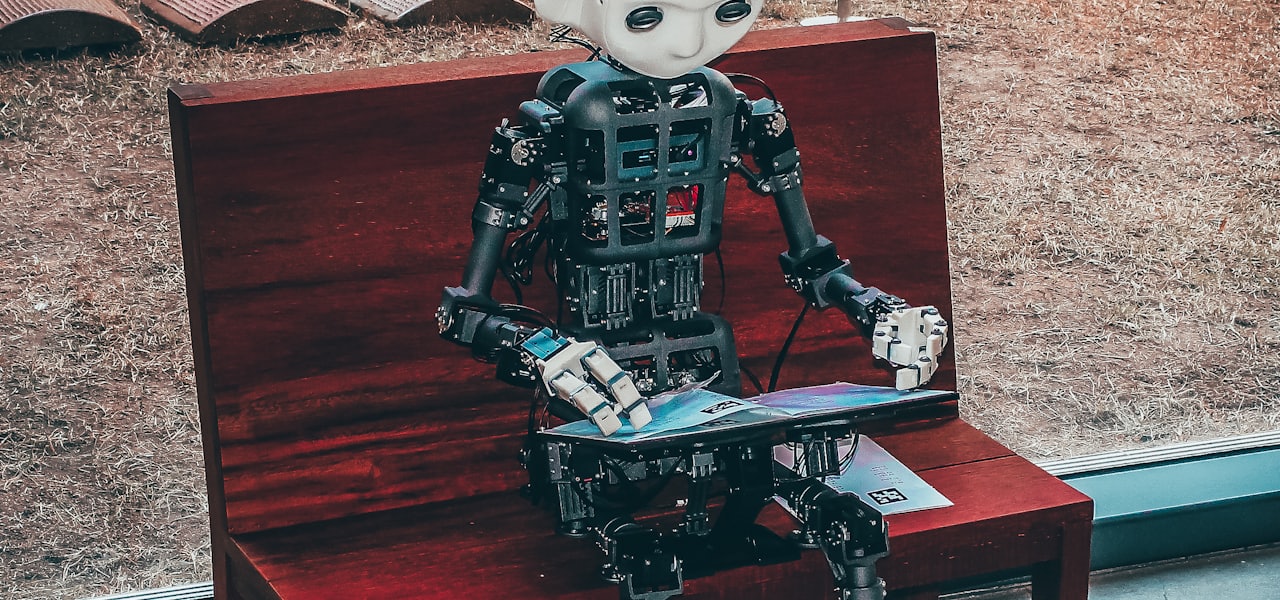
Materials informatics is a field of study that applies the principles of informatics and data science to materials science and engineering to improve the understanding, use, selection, development, and discovery of materials. The term "materials informatics" is frequently used interchangeably with "data science", "machine learning", and "artificial intelligence" by the community. This is an emerging field, with a goal to achieve high-speed and robust acquisition, management, analysis, and dissemination of diverse materials data with the goal of greatly reducing the time and risk required to develop, produce, and deploy new materials, which generally takes longer than 20 years. This field of endeavor is not limited to some traditional understandings of the relationship between materials and information. Some more narrow interpretations include combinatorial chemistry, process modeling, materials databases, materials data management, and product life cycle management. Materials informatics is at the convergence of these concepts, but also transcends them and has the potential to achieve greater insights and deeper understanding by applying lessons learned from data gathered on one type of material to others. By gathering appropriate meta data, the value of each individual data point can be greatly expanded. == Databases == Databases are essential for any informatics research and applications. In material informatics many databases exist containing both empirical data obtained experimentally, and theoretical data obtained computationally. Big data that can be used for machine learning is particularly difficult to obtain for experimental data due to the lack of a standard for reporting data and the variability in the experimental environment. This lack of big data has led to growing effort in developing machine learning techniques that utilize data extremely data sets. On the other hand, large uniform database of theoretical density functional theory (DFT) calculations exists. These databases have proven their utility in high-throughput material screening and discovery. Some common DFT databases and high throughput tools are listed below: Databases: MaterialsProject.org, MaterialsWeb.org (University of Florida) HT software: Pymatgen, MPInterfaces, Matminer == Beyond computational methods? == The concept of materials informatics is addressed by the Materials Research Society. For example, materials informatics was the theme of the December 2006 issue of the MRS Bulletin. The issue was guest-edited by John Rodgers of Innovative Materials, Inc., and David Cebon of Cambridge University, who described the "high payoff for developing methodologies that will accelerate the insertion of materials, thereby saving millions of investment dollars." The editors focused on the limited definition of materials informatics as primarily focused on computational methods to process and interpret data. They stated that "specialized informatics tools for data capture, management, analysis, and dissemination" and "advances in computing power, coupled with computational modeling and simulation and materials properties databases" will enable such accelerated insertion of materials. A broader definition of materials informatics goes beyond the use of computational methods to carry out the same experimentation, viewing materials informatics as a framework in which a measurement or computation is one step in an information-based learning process that uses the power of a collective to achieve greater efficiency in exploration. When properly organized, this framework crosses materials boundaries to uncover fundamental knowledge of the basis of physical, mechanical, and engineering properties. == Challenges == While there are many who believe in the future of informatics in the materials development and scaling process, many challenges remain. Hill, et al., write that "Today, the materials community faces serious challenges to bringing about this data-accelerated research paradigm, including diversity of research areas within materials, lack of data standards, and missing incentives for sharing, among others. Nonetheless, the landscape is rapidly changing in ways that should benefit the entire materials research enterprise." This remaining tension between traditional materials development methodologies and the use of more computationally, machine learning, and analytics approaches will likely exist for some time as the materials industry overcomes some of the cultural barriers necessary to fully embrace such new ways of thinking. == Analogy from Biology == The overarching goals of bioinformatics and systems biology may provide a useful analogy. Andrew Murray of Harvard University expresses the hope that such an approach "will save us from the era of "one graduate student, one gene, one PhD". Similarly, the goal of materials informatics is to save us from one graduate student, one alloy, one PhD. Such goals will require more sophisticated strategies and research paradigms than applying data-science methods to the same tasks set currently undertaken by students.
Lexical substitution
Lexical substitution is the task of identifying a substitute for a word in the context of a clause. For instance, given the following text: "After the match, replace any remaining fluid deficit to prevent chronic dehydration throughout the tournament", a substitute of game might be given. Lexical substitution is strictly related to word sense disambiguation (WSD), in that both aim to determine the meaning of a word. However, while WSD consists of automatically assigning the appropriate sense from a fixed sense inventory, lexical substitution does not impose any constraint on which substitute to choose as the best representative for the word in context. By not prescribing the inventory, lexical substitution overcomes the issue of the granularity of sense distinctions and provides a level playing field for automatic systems that automatically acquire word senses (a task referred to as Word Sense Induction). == Evaluation == In order to evaluate automatic systems on lexical substitution, a task was organized at the Semeval-2007 evaluation competition held in Prague in 2007. A Semeval-2010 task on cross-lingual lexical substitution has also taken place. == Skip-gram model == The skip-gram model takes words with similar meanings into a vector space (collection of objects that can be added together and multiplied by numbers) that are found close to each other in N-dimensions (list of items). A variety of neural networks (computer system modeled after a human brain) are formed together as a result of the vectors and networks that are related together. This all occurs in the dimensions of the vocabulary that has been generated in a network. The model has been used in lexical substitution automation and prediction algorithms. One such algorithm developed by Oren Melamud, Omer Levy, and Ido Dagan uses the skip-gram model to find a vector for each word and its synonyms. Then, it calculates the cosine distance between vectors to determine which words will be the best substitutes. === Example === In a sentence like "The dog walked at a quick pace" each word has a specific vector in relation to the other. The vector for "The" would be [1,0,0,0,0,0,0] because the 1 is the word vocabulary and the 0s are the words surrounding that vocabulary, which create a vector.
Vilém Flusser
Vilém Flusser (May 12, 1920 – November 27, 1991) was a Czech-born Brazilian philosopher, writer and journalist, best known for his contributions to media studies, communication theory, and the philosophy of language. He lived for a long period in São Paulo (where he became a Brazilian citizen) and later in France, and his works are written in many different languages. His early work was marked by discussion of the thought of Martin Heidegger, and by the influence of existentialism and phenomenology. Phenomenology would play a major role in the transition to the later phase of his work, in which he turned his attention to the philosophy of communication and of artistic production. He contributed to the dichotomy logic theory through history: the period of image worship, and period of text worship, with deviations consequently into idolatry and "textolatry". == Life == Flusser was born in 1920 in Prague, Czechoslovakia into a family of Jewish intellectuals. His father, Gustav Flusser, studied mathematics and physics (under Albert Einstein among others). Vilém attended German and Czech primary schools and later a German grammar school. In 1938, Flusser started to study philosophy at the Juridical Faculty of the Charles University in Prague. In 1939, shortly after the Nazi occupation, Flusser emigrated to London (with Edith Barth, his later wife, and her parents) to continue his studies for one term at the London School of Economics and Political Science. Vilém Flusser lost all of his family in the German concentration camps: his father died in Buchenwald in 1940; his grandparents, his mother and his sister were brought to Theresienstadt and later to Auschwitz where they were killed. The next year, he emigrated to Brazil, living both in São Paulo and Rio de Janeiro. He started working at a Czech import/export company and then at Stabivolt, a manufacturer of radios and transistors. In 1960 he started to collaborate with the Brazilian Institute of Philosophy (IBF) in São Paulo and published in the Revista Brasileira de Filosofia; by these means he seriously approached the Brazilian intellectual community. Flusser had as his friend and closest interlocutor the Brazilian philosopher Vicente Ferreira da Silva. Flusser and Vicente Ferreira da Silva met in São Paulo in the 1960s and began a close intellectual dialogue that continued until Ferreira da Silva's death in 1963. Flusser wrote several essays on Ferreira da Silva's work and that Ferreira da Silva's concept of "Fundamental ontology” had a significant impact on Flusser's understanding of the nature of reality. During the 60s Flusser published and taught at several schools in São Paulo, being Lecturer for Philosophy of Science at the Escola Politécnica of the University of São Paulo and Professor of Philosophy of Communication at the Escola Dramática and the Escola Superior de Cinema in São Paulo. He also participated actively in the arts, collaborating with the Bienal de São Paulo, among other cultural events. Beginning in the 1950s he taught philosophy and worked as a journalist, before publishing his first book Língua e realidade (Language and Reality) in 1963. In 1972 he decided to leave Brazil. Some say it was because it was becoming difficult to publish because of the military regime. Others dispute this reason, since his work on communication and language did not threaten the military. In 1970, when a reform took place at the University of São Paulo by the Brazilian military government, all Lecturers of Philosophy (members of the Department of Philosophy) were dismissed. Flusser, who taught at the Engineering School (Escola Politécnica), had to leave the university as well. In 1972 he and his wife Edith settled temporarily in Merano (Tyrol). Further short stays in various European countries followed until they moved to Robion in southern France in 1981, where they remained until Flusser's death in 1991. To the end of his life, he was quite active writing and giving lectures around media theory and working with new topics (Philosophy of Photography, Technical Images, etc.). He died in 1991 in a car accident near the Czech–German border, while trying to visit his native city, Prague, to give a lecture. Vilém Flusser is the cousin of David Flusser. == Philosophy == Flusser's essays are short, provocative and lucid, with a resemblance to the style of journalistic articles. Critics have noted he is less a 'systematic' thinker than a 'dialogic' one, purposefully eclectic and provocative (Cubitt 2004). However, his early books, written in the 1960s, primarily in Portuguese, and published in Brazil, have a slightly different style. Flusser's writings relate to each other, however, which means that he intensively works over certain topics and dissects them into a number of brief essays. His main topics of interest were: epistemology, ethics, aesthetics, ontology, language philosophy, semiotics, philosophy of science, the history of Western culture, the philosophy of religion, the history of symbolic language, technology, writing, the technical image, photography, migration, media and literature, and, especially in his later years, the philosophy of communication and of artistic production. His writings reflect his wandering life: although the majority of his work was written in German and Portuguese, he also wrote in English and French, with scarce translation to other languages. Because Flusser's writings in different languages are dispersed in the form of books, articles or sections of books, his work as a media philosopher and cultural theorist is only now becoming more widely known. The first book by Flusser to be published in English was Towards a Philosophy of Photography in 1984 by the then new journal European Photography, which was his own translation of the work. The Shape of Things, was published in London in 1999 and was followed by a new translation of Towards a Philosophy of Photography. Flusser's archives have been held by the Academy of Media Arts in Cologne and are currently housed at the Berlin University of the Arts. === Philosophy of photography === Writing about photography in the 1970s and 80s, in the face of the early worldwide impact of computer technologies, Flusser argued that the photograph was the first in a number of technical image forms to have fundamentally changed the way in which the world is seen. Historically, the importance of photography had been that it introduced nothing less than a new epoch: 'The invention of photography constitutes a break in history that can only be understood in comparison to that other historical break constituted by the invention of linear writing.' Whereas ideas might previously have been interpreted in terms of their written form, photography heralded new forms of perceptual experience and knowledge. As Flusser Archive Supervisor Claudia Becker describes, "For Flusser, photography is not only a reproductive imaging technology, it is a dominant cultural technique through which reality is constituted and understood". In this context, Flusser argued that photographs have to be understood in strict separation from 'pre-technical image forms'. For example, he contrasted them to paintings which he described as images that can be sensibly 'decoded', because the viewer is able to interpret what he or she sees as more or less direct signs of what the painter intended. By contrast, even though photography produces images that seem to be 'faithful reproductions' of objects and events they cannot be so directly 'decoded'. The crux of this difference stems, for Flusser, from the fact that photographs are produced through the operations of an apparatus. And the photographic apparatus operates in ways that are not immediately known or shaped by its operator. For example, he described the act of photographing as follows: The photographer's gesture as the search for a viewpoint onto a scene takes place within the possibilities offered by the apparatus. The photographer moves within specific categories of space and time regarding the scene: proximity and distance, bird- and worm's-eye views, frontal- and side-views, short or long exposures, etc. The Gestalt of space–time surrounding the scene is prefigured for the photographer by the categories of his camera. These categories are an a priori for him. He must 'decide' within them: he must press the trigger. Roughly put, the person using a camera might think that they are operating its controls to produce a picture that shows the world the way they want it to be seen, but it is the pre-programmed character of the camera that sets the parameters of this act and it is the apparatus that shapes the meaning of the resulting image. Given the central role of photography to almost all aspects of contemporary life, the programmed character of the photographic apparatus shapes the experience of looking at and interpreting photographs as well as most of the cultural contexts in which we do so. Flusse
MIT Computer Science and Artificial Intelligence Laboratory
Computer Science and Artificial Intelligence Laboratory (CSAIL) is a research institute at the Massachusetts Institute of Technology (MIT) formed by the 2003 merger of the Laboratory for Computer Science (LCS) and the Artificial Intelligence Laboratory (AI Lab). Housed within the Ray and Maria Stata Center, CSAIL is the largest on-campus laboratory as measured by research scope and membership. It is part of the Schwarzman College of Computing but is also overseen by the MIT Vice President of Research. == Research activities == CSAIL's research activities are organized around a number of semi-autonomous research groups, each of which is headed by one or more professors or research scientists. These groups are divided up into seven general areas of research: Artificial intelligence Computational biology Graphics and vision Language and learning Theory of computation Robotics Systems (includes computer architecture, databases, distributed systems, networks and networked systems, operating systems, programming methodology, and software engineering, among others) == History == Computing Research at MIT began with Vannevar Bush's research into a differential analyzer and Claude Shannon's electronic Boolean algebra in the 1930s, the wartime MIT Radiation Laboratory, the post-war Project Whirlwind and the Research Laboratory of Electronics (RLE), and MIT Lincoln Laboratory's SAGE in the early 1950s. At MIT, research in the field of artificial intelligence began in the late 1950s. === Project MAC === On July 1, 1963, Project MAC (the Project on Mathematics and Computation, later backronymed to Multiple Access Computer, Machine Aided Cognitions, or Man and Computer) was launched with a $2 million grant from the Defense Advanced Research Projects Agency (DARPA). Project MAC's original director was Robert Fano of MIT's Research Laboratory of Electronics (RLE). Fano decided to call MAC a "project" rather than a "laboratory" for reasons of internal MIT politics – if MAC had been called a laboratory, then it would have been more difficult to raid other MIT departments for research staff. The program manager responsible for the DARPA grant was J. C. R. Licklider, who had previously been at MIT conducting research in RLE, and would later succeed Fano as director of Project MAC. Project MAC would become famous for groundbreaking research in operating systems, artificial intelligence, and the theory of computation. Its contemporaries included Project Genie at Berkeley, the Stanford Artificial Intelligence Laboratory, and (somewhat later) University of Southern California's (USC's) Information Sciences Institute. An "AI Group" including Marvin Minsky (the director), John McCarthy (inventor of Lisp), and a talented community of computer programmers were incorporated into Project MAC. They were interested principally in the problems of vision, mechanical motion and manipulation, and language, which they view as the keys to more intelligent machines. In the 1960s and 1970s the AI Group developed a time-sharing operating system called Incompatible Timesharing System (ITS) which ran on PDP-6 and later PDP-10 computers. The early Project MAC community included Fano, Minsky, Licklider, Fernando J. Corbató, and a community of computer programmers and enthusiasts among others who drew their inspiration from former colleague John McCarthy. These founders envisioned the creation of a computer utility whose computational power would be as reliable as an electric utility. To this end, Corbató brought the first computer time-sharing system, Compatible Time-Sharing System (CTSS), with him from the MIT Computation Center, using the DARPA funding to purchase an IBM 7094 for research use. One of the early focuses of Project MAC would be the development of a successor to CTSS, Multics, which was to be the first high availability computer system, developed as a part of an industry consortium including General Electric and Bell Laboratories. In 1966, Scientific American featured Project MAC in the September thematic issue devoted to computer science, that was later published in book form. At the time, the system was described as having approximately 100 TTY terminals, mostly on campus but with a few in private homes. Only 30 users could be logged in at the same time. The project enlisted students in various classes to use the terminals simultaneously in problem solving, simulations, and multi-terminal communications as tests for the multi-access computing software being developed. === AI Lab and LCS === In the late 1960s, Minsky's artificial intelligence group was seeking more space, and was unable to get satisfaction from project director Licklider. Minsky found that although Project MAC as a single entity could not get the additional space he wanted, he could split off to form his own laboratory and then be entitled to more office space. As a result, the MIT AI Lab was formed in 1970, and many of Minsky's AI colleagues left Project MAC to join him in the new laboratory, while most of the remaining members went on to form the Laboratory for Computer Science. Talented programmers such as Richard Stallman, who used TECO to develop EMACS, flourished in the AI Lab during this time. Those researchers who did not join the smaller AI Lab formed the Laboratory for Computer Science and continued their research into operating systems, programming languages, distributed systems, and the theory of computation. Two professors, Hal Abelson and Gerald Jay Sussman, chose to remain neutral—their group was referred to variously as Switzerland and Project MAC for the next 30 years. Among much else, the AI Lab led to the invention of Lisp machines and their attempted commercialization by two companies in the 1980s: Symbolics and Lisp Machines Inc. === CSAIL === On the fortieth anniversary of Project MAC's establishment, July 1, 2003, LCS was merged with the AI Lab to form the MIT Computer Science and Artificial Intelligence Laboratory, or CSAIL. This merger created the largest laboratory (over 600 personnel) on the MIT campus. In 2018, CSAIL launched a five-year collaboration program with IFlytek, a company sanctioned the following year for allegedly using its technology for surveillance and human rights abuses in Xinjiang. In October 2019, MIT announced that it would review its partnerships with sanctioned firms such as iFlyTek and SenseTime. In April 2020, the agreement with iFlyTek was terminated. CSAIL moved from the School of Engineering to the newly formed Schwarzman College of Computing by February 2020. == Offices == From 1963 to 2004, Project MAC, LCS, the AI Lab, and CSAIL had their offices at 545 Technology Square, taking over more and more floors of the building over the years. In 2004, CSAIL moved to the new Ray and Maria Stata Center, which was built specifically to house it and other departments. == Outreach activities == The IMARA (from Swahili word for "power") group sponsors a variety of outreach programs that bridge the global digital divide. Its aim is to find and implement long-term, sustainable solutions which will increase the availability of educational technology and resources to domestic and international communities. These projects are run under the aegis of CSAIL and staffed by MIT volunteers who give training, install and donate computer setups in greater Boston, Massachusetts, Kenya, Native American Indian tribal reservations in the American Southwest such as the Navajo Nation, the Middle East, and Fiji Islands. The CommuniTech project strives to empower under-served communities through sustainable technology and education and does this through the MIT Used Computer Factory (UCF), providing refurbished computers to under-served families, and through the Families Accessing Computer Technology (FACT) classes, it trains those families to become familiar and comfortable with computer technology. == Notable researchers == (Including members and alumni of CSAIL's predecessor laboratories) MacArthur Fellows Tim Berners-Lee, Erik Demaine, Dina Katabi, Daniela L. Rus, Regina Barzilay, Peter Shor, Richard Stallman, and Joshua Tenenbaum Turing Award recipients Leonard M. Adleman, Fernando J. Corbató, Shafi Goldwasser, Butler W. Lampson, John McCarthy, Silvio Micali, Marvin Minsky, Ronald L. Rivest, Adi Shamir, Barbara Liskov, and Michael Stonebraker IJCAI Computers and Thought Award recipients Terry Winograd, Patrick Winston, David Marr, Gerald Jay Sussman, Rodney Brooks Rolf Nevanlinna Prize recipients Madhu Sudan, Peter Shor, Constantinos Daskalakis Gödel Prize recipients Shafi Goldwasser (two-time recipient), Silvio Micali, Maurice Herlihy, Charles Rackoff, Johan Håstad, Peter Shor, and Madhu Sudan Grace Murray Hopper Award recipients Robert Metcalfe, Shafi Goldwasser, Guy L. Steele, Jr., Richard Stallman, and W. Daniel Hillis Textbook authors Harold Abelson and Gerald Jay Sussman, Richard Stallman, Thomas H. Cormen, Charles E. Leiserson, Patrick Winston, Ronald L.
MacSpeech Scribe
MacSpeech Scribe is speech recognition software for Mac OS X designed specifically for transcription of recorded voice dictation. It runs on Mac OS X 10.6 Snow Leopard. The software transcribes dictation recorded by an individual speaker. Typically, the speaker will record their dictation using a digital recording device such as a handheld digital recorder, mobile smartphone (e.g. iPhone), or desktop or laptop computer with a suitable microphone. MacSpeech Scribe supports specific audio file formats for recorded dictation: .aif, .aiff, .wav, .mp4, .m4a, and .m4v. MacSpeech Scribe was originally developed by MacSpeech, Inc. and released February 11, 2010, at Macworld Expo in San Francisco. The product is now owned by Nuance Communications which acquired MacSpeech on February 16, 2010. Nuance is the developer of other speech recognition products including Dragon NaturallySpeaking for Windows, Dragon Dictate for Mac (formerly "MacSpeech Dictate"), and Dragon Dictation apps for iOS. Jeffery Battersby of Macworld noted in his September 2010 review of MacSpeech Scribe, v1.1: Small foibles aside, MacSpeech Scribe is a powerful and intelligent tool for transcribing your recorded speech. A simple training process and access to a wide variety of standard audio formats mean that you’ll be moving your spoken text to the printed page in a matter of minutes and with a minimum of hassle. Scribe is the best, simplest way for you to get your spoken word to the printed page. == Release history ==
Grammatik
Grammatik was the first grammar-checking program for home computers. Aspen Software of Albuquerque, NM, released the earliest version of this diction and style checker for personal computers. It was first released no later than 1981, and was inspired by the Writer's Workbench. Grammatik was first available for the TRS-80, and soon had versions for CP/M and the IBM PC. Reference Software International of San Francisco, California, acquired Grammatik in 1985. Development of Grammatik continued, and it became an actual grammar checker that could detect writing errors beyond simple style checking. Subsequent versions were released for MS-DOS, Windows, Macintosh, and Unix. Grammatik was ultimately acquired by WordPerfect Corporation and is integrated into the WordPerfect word processor.
Brain.js
Brain.js is a JavaScript library used for neural networking, which is released as free and open-source software under the MIT License. It can be used in both the browser and Node.js backends. Brain.js is most commonly used as a simple introduction to neural networking, as it hides complex mathematics and has a familiar modern JavaScript syntax. It is maintained by members of the Brain.js organization and open-source contributors. == Examples == Creating a feedforward neural network with backpropagation: Creating a recurrent neural network: Train the neural network on RGB color contrast: